
The Journey to Personalized Mindfulness
How Headspace can support users on their individual mindfulness journey
CONTEXT
How Can Mindfulness Apps Get MORE Personal?
As someone on their own journey with mindfulness, I’ve experimented with many different apps with varied success. Some app experiences really resonated with me, while others just did not hit the mark. My mindfulness journey actually began in high school when I downloaded the app Headspace. I was immediately drawn to the engaging design and bite-sized meditations and instruction that made the app beginner friendly and easy to use.
As I’ve gone from meditation-curious to a dedicated practitioner, I’ve begun to expect more from the mindfulness apps I use. Which has led me to trying to solve the problem many users are running into today - how do mindfulness apps go beyond the default experience to create a tailored and personalized experience for users on their own mindfulness journey?

HYPOTHESIS
If Headspace simplified its navigation and content organization in addition to allowing users to personalize their content feed, they would increase user retention.
Where is the Mindfulness App Market Headed?
THE MARKET
The meditation app market is rapidly growing, with projections indicating substantial increases in market size and user base. This growth is fueled by a heightened awareness of mental health, the widespread adoption of smartphones, and the impact of global events like the COVID-19 pandemic.
Subscription-based models are becoming increasingly common, suggesting that users are willing to pay for premium content that offers significant value.
Personalization and customization are emerging as key trends, with apps focusing on tailoring the user experience to individual preferences and goals.
Sources: AppInventiv, Statista
There are more than 2,500 meditation and mindfulness apps in the global market. The global mindfulness meditation apps market size is expected to show an annual growth rate (CAGR 2022-2026) of 13.35% and reach $4.2B by 2027.
What Mindfulness Apps are out there?
The top competitors in the meditation & mindfulness app industry are Calm, Headspace, and InsightTimer. Other apps like Waking Up, Breethe, and Meditopia have started to gain traction, but haven’t reached usage rates similar to the top players.
THE AUDIENCE
Who is currently on Headspace?
-
Adults between the ages of 18- 45.
-
Popular in urban areas where the pace of life can be more hectic
-
Suitable to wide range of socioeconomic backgrounds, but lack of free content is a barrier for some.
-
Personal development, fitness, health & wellbeing, stress management.
-
Work pressure, relationship challenges, anxiety, difficulty sleeping, or trouble focusing.
-
Achieve mental clarity, reduce stress, improve focus, boost productivity, reduce anxiety.
-
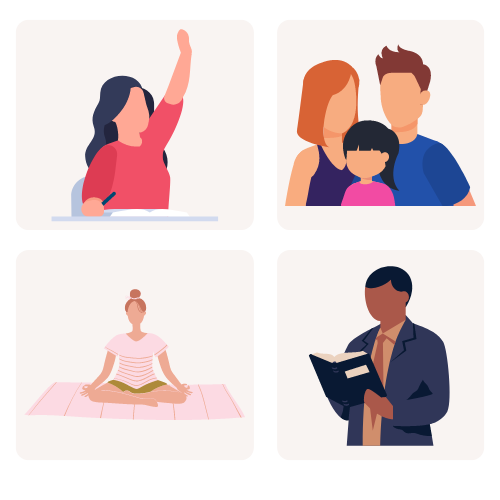
Student,
Working Professionals,
Parents,
Individuals with Mental Health Concerns
…and who is looking for a customized experience?
-
Higher income, willing to pay for personalization
-
Personal development, meditation, health & wellbeing, spirituality
-
Lack of consistency in meditation routine, lack of time to meditate, lack of personalization in mindfulness apps, boredom with mindfulness routine, struggle to find suitable meditations
-
Build consistent mindfulness practice, improve focus, reduce anxiety, lead balanced life
-
Routine-Oriented Individuals
Experienced Meditators
Mindfulness App Enthusiasts
Tech-Savvy Users

What are the pain points that these users need addressed?
USER INSIGHTS

UX Overcrowding & Difficult Navigation
Users are struggling to find content on mindfulness apps, find the library of options to chose from overwhelming, and user experience cluttered.
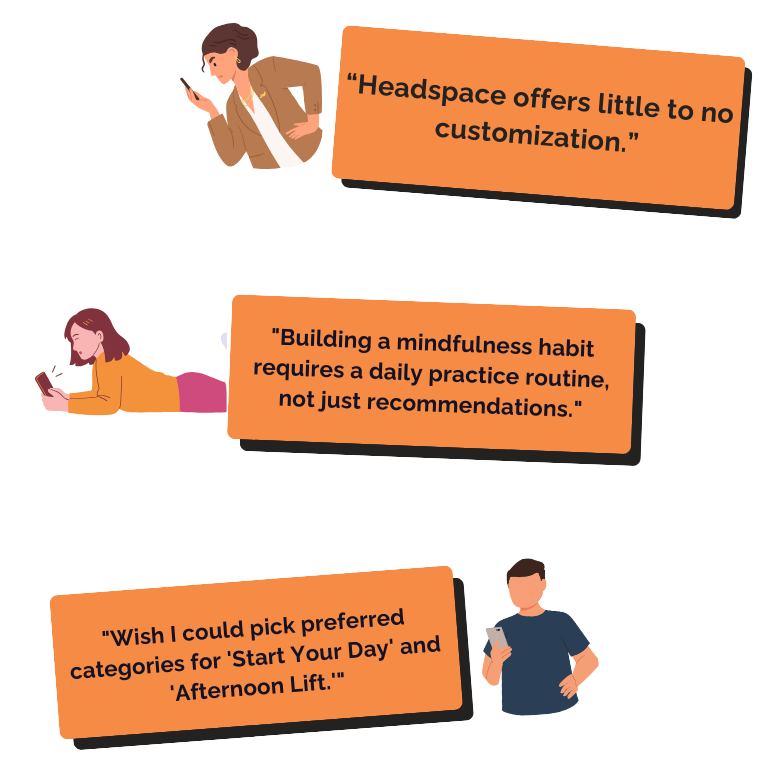
Lack of Customization
Users desire more customization from mindfulness apps and to curate their experience more suited to their preferences.

Playlist Creation & Queuing
Users are seeking the ability to create playlist and queue mindfulness practices, further exemplifying their desire for customization.

How do these users find meditations on Headspace?
USER JOURNEY
In general, the process to find meditations for both “New Users” and “Existing Users” can be confusing and cumbersome. There are several instances of the user experience where it might be difficult to locate a previously played meditation that the user enjoyed or to curate meditations based on themes and moods, like a playlist. The main similarity between both groups is that everything starts on the “Today” page which doesn’t support particular interests or moods.
Big Takeaways

The Market
The Discover phase highlighted the importance of personalization and ease of use in the mindfulness app market. Competitors and indirect competitors are expanding their offerings to meet a broad spectrum of user needs, from stress management to sleep improvement. Competitors like InsightTimer are experimenting with personalization features like playlists but overall there is a clear gap in the market for an app that offers a high level of customization and user-tailored content. A common feeling amongst users is that they are expecting more personalization capabilities from their mindfulness apps. Moving away from a one-size-fits-all approach and addressing the pain points related to UI overcrowding, difficulty finding content, and lack of personalization could significantly enhance user retention and satisfaction.

The Problem
The lack of personalization and customization options within mindfulness platforms leads to a user experience that feels generic and impersonal. This problem is compounded by interfaces that are difficult to navigate, making it hard for users to find content that resonates with their individual preferences, goals, and daily routines. Users desire a mindfulness practice that integrates into their personal and professional lives, yet they find themselves hindered by static, one-size-fits-all content offerings and a user interface that is hard to navigate.

THE GOAL
For Users:
Better mental health outcomes by facilitating a personalized mindfulness journey instead of a one-size-fits all approach.
For Headspace:
Significantly increase premium user retention rates by creating personalized experiences.
What should be included in the MVP?
FEATURE PRIORITIZATION & MVP DEFINITION
For a successful pilot to be run for Headspace, the following user stories are required.
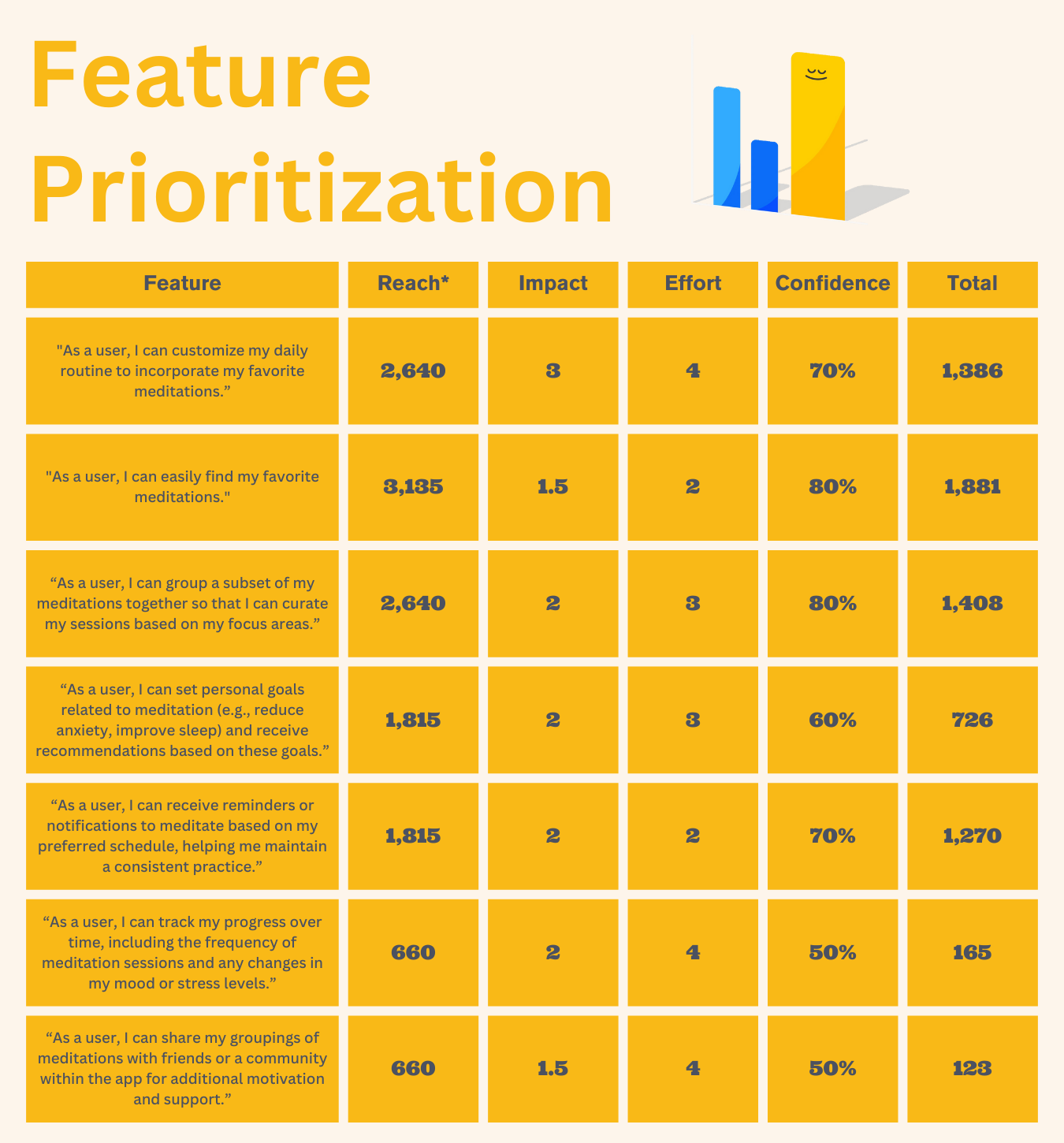
*Based on 3.3 million monthly active users, reach is calculated by the following assumptions:
1 - Few users - 20%
2 - Many users - 55%
3 - Most users - 80%
4 - All users - 95%
What would solutions that meet these concerns look like in App?
SOLUTIONS EXPLORED
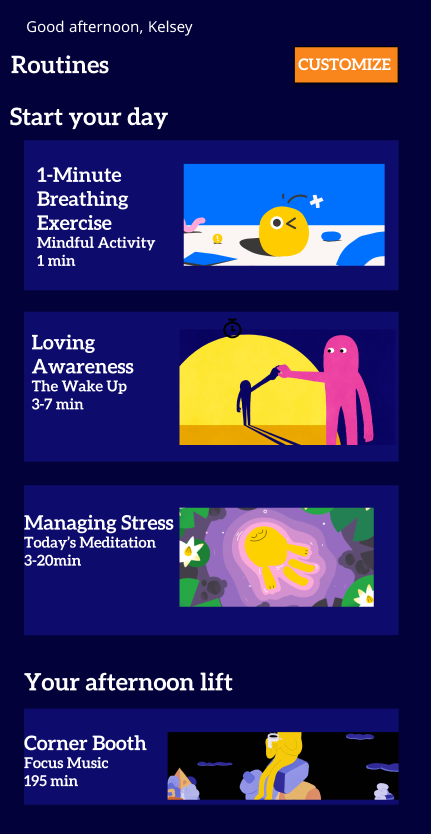
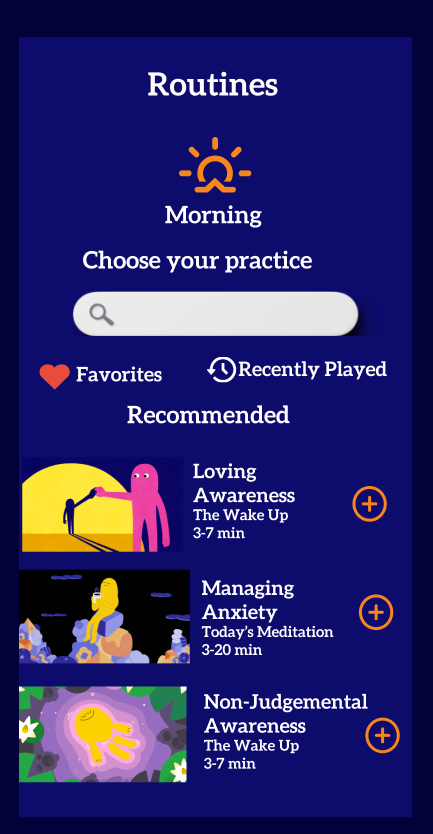
Customize Homepage routines

A feature enabling users to customize their homepage with routines they've created of their favorite meditation sessions.
Highlight favorites on profile

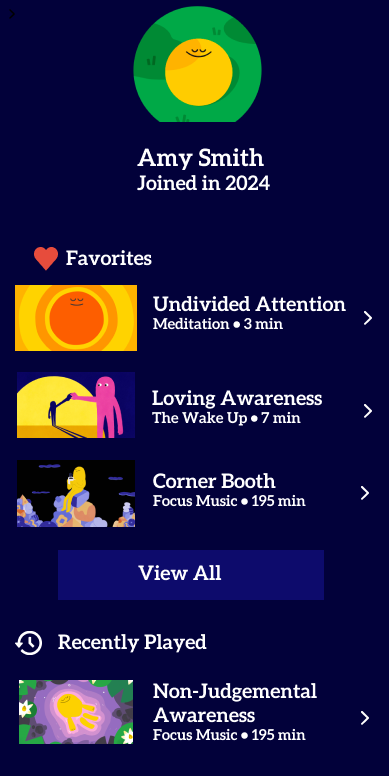
A feature enabling users to access their favorite meditations from their profile.

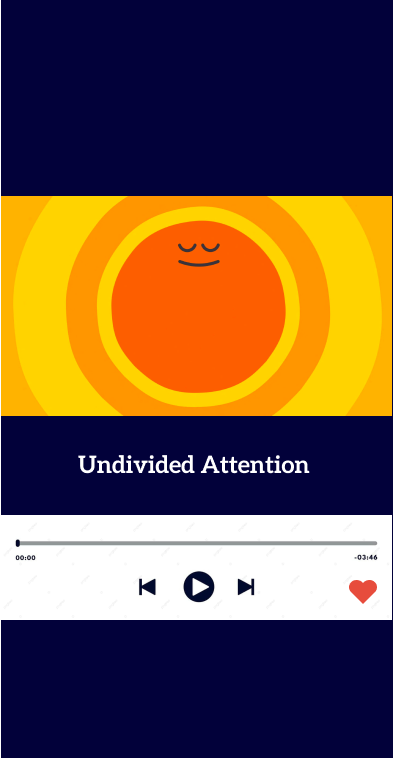
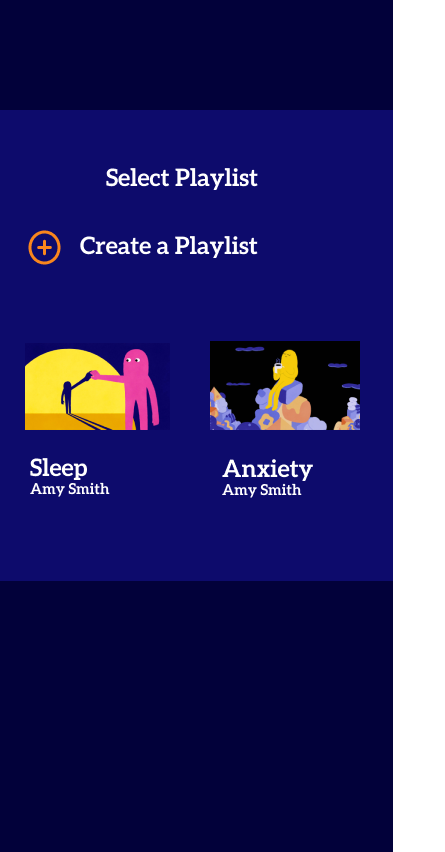
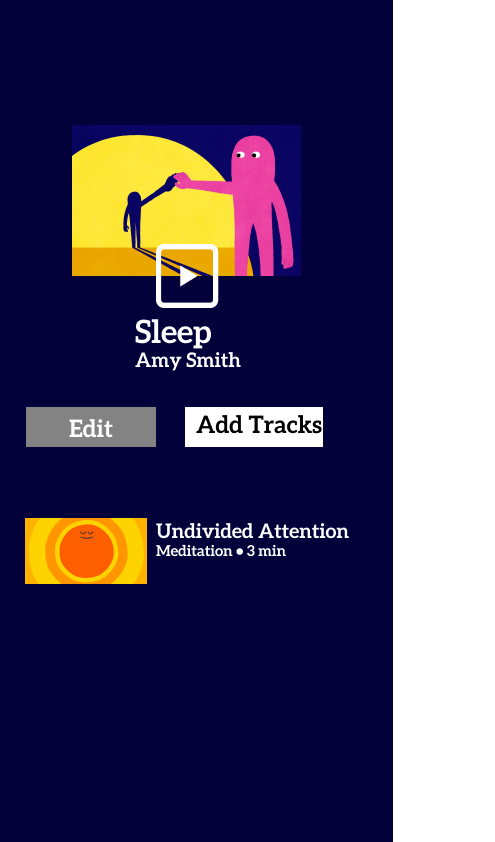
Playlists

A feature enabling users to create playlists and curate sessions using criteria such as category, interests, time of day, or focus areas.
User Testing Plan
User Testing & Feedback
1. Define Objectives
First, define objectives by assessing the desirability, necessity, and usability of potential features. This involves determining which features to develop by evaluating their desirability, validating the need for them, and testing their usability.

2. Recruit Participants
To determine and recruit participants effectively, create an audience profile comprising both experienced meditation app users and newcomers to mindfulness who match the demographics and psychographics of Headspace users. Then, recruit participants by reaching out to friends, family, acquaintances, and members of local yoga and meditation studios.
3. Select Testing
Select surveys as your testing method for their broad reach, scalability, and cost-effectiveness. Surveys allow users to offer honest, anonymous qualitative and quantitative feedback, ensuring comprehensive insights.
Which feature improvement was most desired by Headspace Users?
EVALUATING SOLUTIONS
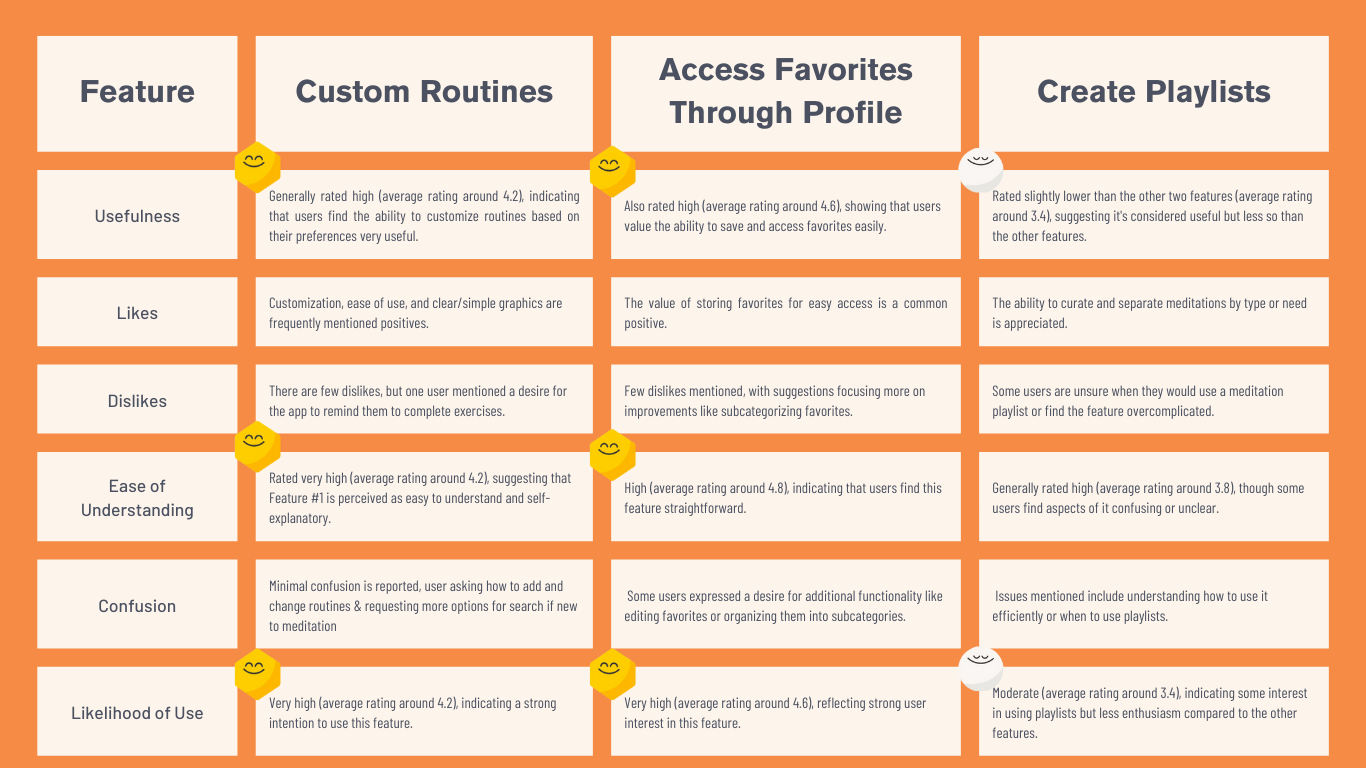
Users were asked to rank the three features in order of preference. The aggregated ranking suggests the following order of preference:
Feature #1: Custom Routines
Feature #2: Access Favorites Through Profile
Feature #3: Create Playlists
This ranking aligns with the quantitative ratings and qualitative feedback, where Features #1 and #2 are perceived as more useful, easier to understand, and more likely to be used compared to Feature #3.
Summary
Users find all three features generally useful, with a preference for custom routines and accessing favorites due to their ease of use, practicality, and the value they add to the user experience. While the playlist creation feature is appreciated for its potential to curate meditations, it is viewed as slightly less essential compared to the other features.
FINAL SOLUTION
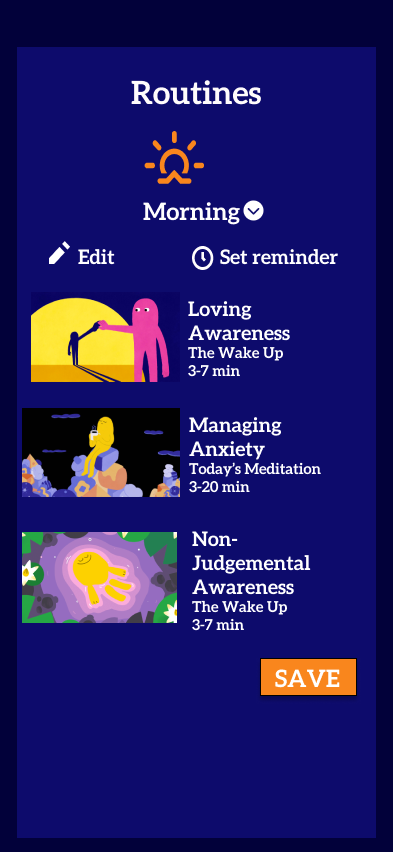
Custom Routines
on Headspace

Personalize your Practice
Create mindfulness routines that suit your individual preferences, goals, and schedules.
Build a Routine
Build a regular mindfulness practice that fits into your daily routine.
Stay Consistent
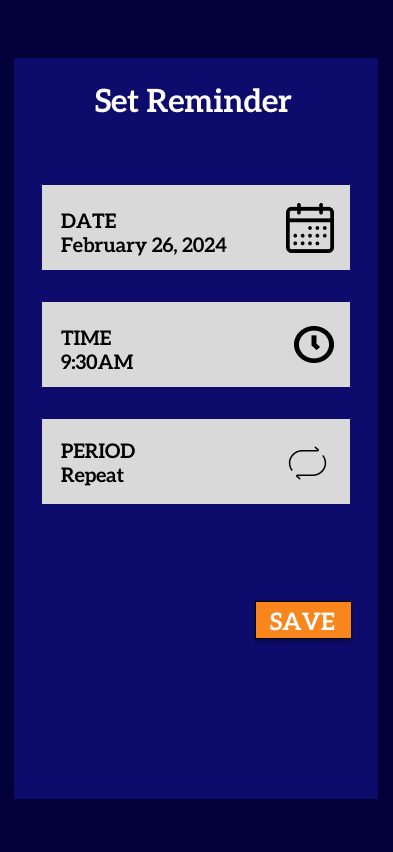
Make sure you’re staying on top of your mindfulness practice with regular reminders.
What would the
User Experience look like?
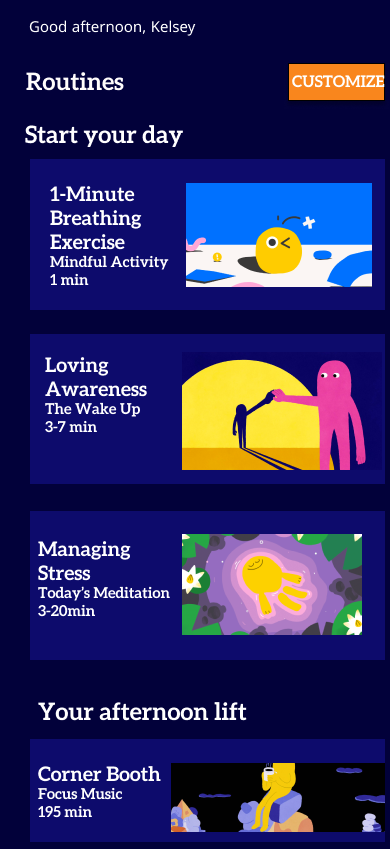
Changing Home Screen depending time of day
The home screen would change depending on the time of day you’re accessing the app, i.e. if you open the app in the evening, you’ll be directed towards your evening routine.
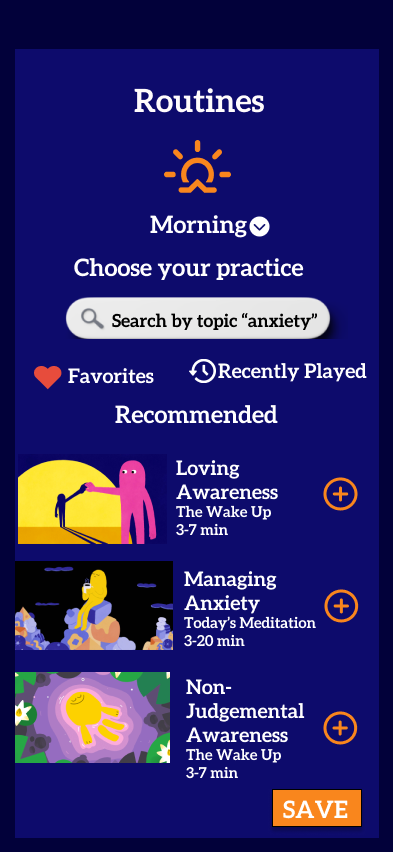
Option to add/edit routine
There is the option to change your routine if your preferences change.
Option to set reminders
There is the option to set reminders to remind yourself to complete your routine.
LAUNCH & GTM STRATEGY
Phased Rollout of ”Custom Routine” Feature
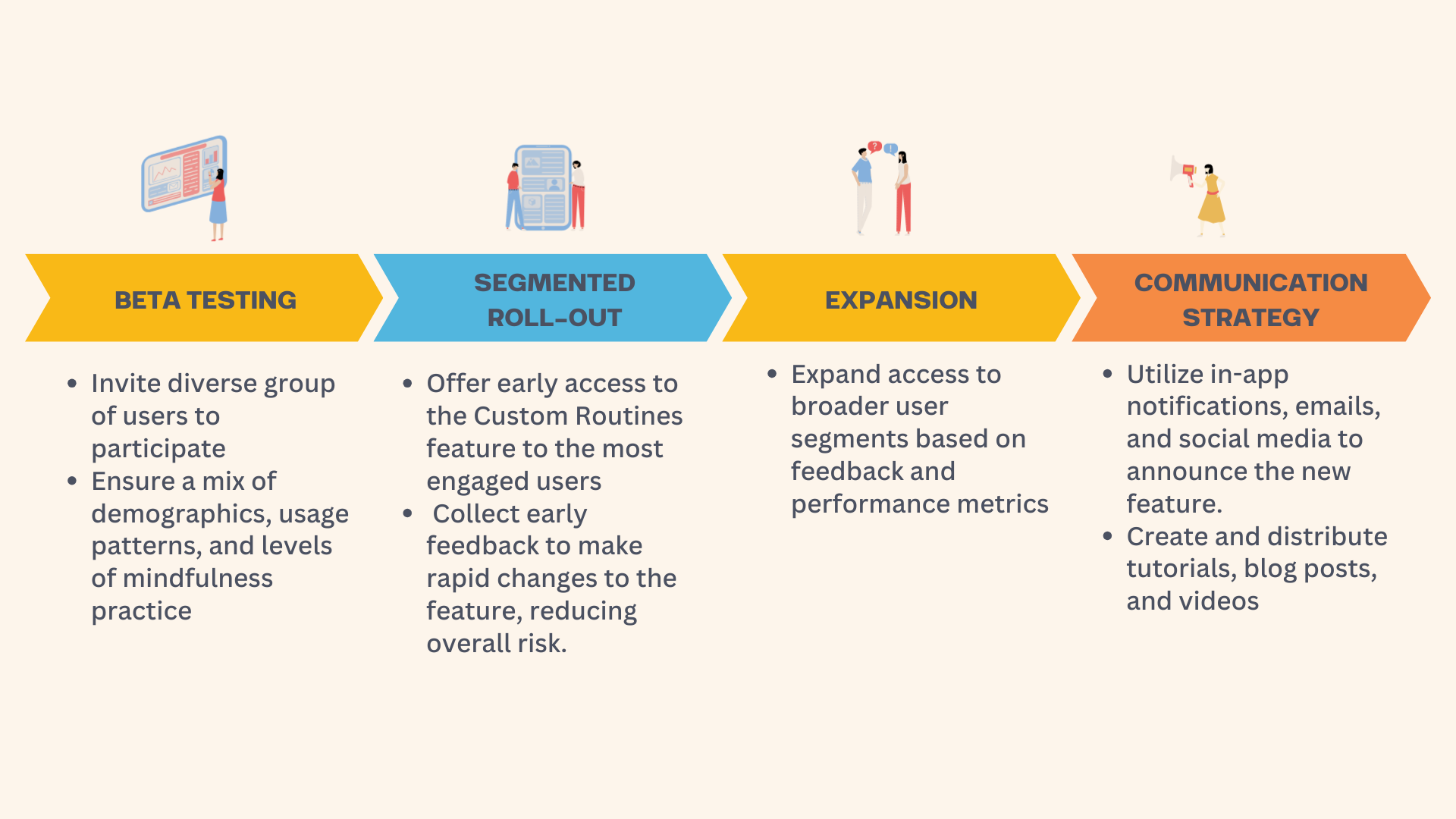
We will start the phased rollout with a pilot. Throughout the pilot, we’ll be in “learn and iterate” mode. After we prove out the concept and work out the kinks, we will begin expanding.
Who is involved?
Launching a Customize Routine pilot will involved various teams across Headspace - with deep involvement from Product, Engineering, Product Marketing, and Customer Support.
Education
We’ll work with a variety of team members to educate internal stakeholders (support, marketing, data science, etc.) about the Customize Routine feature.
MEASURING SUCCESS
Pilot Metrics
NORTH STAR METRIC
User retention for users who engage with the Custom Routines feature
LEADING INDICATORS
Feature Adoption Rate: The percentage of active users who try the Custom Routines feature within the first month of launch. An early indicator of interest and potential long-term engagement.
Routine Customization Frequency: How often users update or customize their routines, indicating the feature's relevance to their daily mindfulness practice.
LAGGING INDICATORS
Retention Rate: Changes in user retention rates post-launch, specifically tracking users who regularly engage with the Custom Routines feature versus those who do not.
Session Length: Average duration of app usage sessions for users engaging with Custom Routines compared to those who don’t, indicating deeper engagement with the app.
COUNTER METRICS
Feature Abandonment Rate: The percentage of users who initially engage with the Custom Routines feature but then stop using it. This metric can indicate if the feature fails to meet user expectations over time.
Support Queries: An uptick in customer support queries related to Custom Routines could indicate usability issues or confusion about the feature.
MONITORING METRICS
Automated Engineering Alerting: Implement automated systems to alert the engineering team about technical issues with the Custom Routines feature, such as bugs or downtime.
Tight Feedback Loop between Customer Support & Product Teams: Establish a systematic process for customer support to report user feedback, issues, and suggestions directly to the product team.
Metric Dashboard: Create a comprehensive dashboard to monitor all the aforementioned metrics in real-time, enabling quick insights into the feature's performance and areas for improvement.


Future Iterations
Since Accessing Favorites Through Profile was a close second when we assessed which feature to build for Headspace, I would recommend pursuing that in the future. Particularly, I would recommend doing A/B testing with the current “Favorites” solution (Favorites tied to home page) vs. the updated “Favorites” solution (Favorites tied to profile) to assess which of the two options users prefer and find more useful.
Expand the customization capabilities to include control over routine elements, such as specific instructors, background sounds, duration, etc.
Provide options for users to share their custom routines on social media and within the app’s community
Introduce community challenges or group routines where users can participate in shared mindfulness goals
Introduce achievements & rewards for users who complete their routines consistently
Integrate with wearable devices like the Oura ring and Apple Watch to utilize health data (heart rate, sleep patterns, and activity levels) for personalized recommendations
Summary
Initially going into this case study, from my personal experience as a meditator, I hypothesized that many users were experiencing the same issues I was having: seeking more personalization from their meditation apps.
“Everyone is on their own journey with mindfulness, and I felt that the standard one-size-fits-all approach is not resonating with users anymore. “
Through extensive user research, my hypothesis was proven correct, users are seeking more personalization from their meditation apps!
I aggregated all the compelling user insights into themes, created user stories, and ranked them based on the RICE scoring methodology, and was able to narrow down three features to enhance personalization: custom routines, favorites, and playlists.

I then sent out a survey to friends, family, and members of a local yoga & meditation studio I belong to. The results were loud & clear - custom routines would solve their needs best and therefore be the most impactful for Headspace.
Custom Routines allows users to personalize their mindfulness experience, access their favorite meditations easily, and build a consistent daily routine - all important aspects to building your own practice. I am confident rolling out this feature will increase user engagement and retention within the app and set the standard for all mindfulness apps moving forward.